The Power of Creativity: Why It Matters More Than Ever
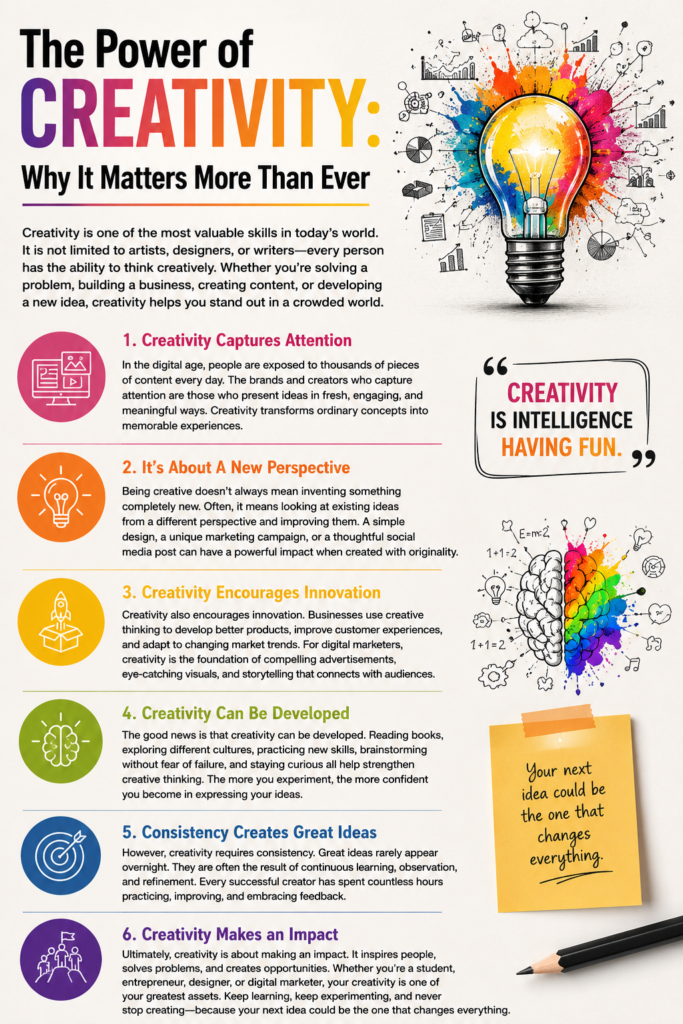
Creativity: The Driving Force Behind Innovation and Success
Creativity is one of the most powerful skills a person can possess. It goes beyond art, music, or design—it is the ability to think differently, solve problems, and transform ordinary ideas into something meaningful. In a world where change happens rapidly and competition grows every day, creativity has become one of the most valuable tools for personal and professional success.
Many people believe creativity is a talent that only a few people are born with. In reality, creativity is a skill that everyone can develop. It begins with curiosity, grows through experience, and becomes stronger with consistent practice. Every innovative product, successful business, inspiring campaign, or groundbreaking invention started as a simple idea fueled by creative thinking.
In today’s digital world, creativity is more important than ever. Every day, millions of blog posts, videos, advertisements, and social media updates compete for people’s attention. With so much content available, audiences naturally gravitate toward ideas that are fresh, authentic, and emotionally engaging. Creativity helps individuals and businesses cut through the noise by delivering memorable experiences that leave a lasting impression.
Creativity is not about making something complicated. Often, the most creative ideas are simple yet effective. A clean website design, a powerful headline, a unique logo, or an engaging social media campaign can create a stronger impact than something overloaded with unnecessary elements. The beauty of creativity lies in its ability to communicate ideas clearly while capturing attention.
One of the greatest benefits of creativity is problem-solving. Every challenge presents an opportunity to think differently and discover better solutions. Instead of accepting limitations, creative thinkers ask questions, explore possibilities, and experiment with new approaches. This mindset leads to innovation, helping businesses improve products, enhance customer experiences, and adapt to changing market demands.
For entrepreneurs, creativity is essential for building a memorable brand. A strong brand is much more than a logo or color palette—it is the story, personality, and value that customers connect with. Creative branding helps businesses establish trust, differentiate themselves from competitors, and build lasting relationships with their audience. Companies that embrace creativity are often the ones that remain relevant even as industries evolve.
Digital marketing is another field where creativity plays a vital role. Successful marketers understand that people respond to stories rather than sales pitches. Creative campaigns combine visuals, emotions, and valuable information to inspire action. Whether it’s a short Instagram Reel, a compelling blog article, or an eye-catching advertisement, creativity transforms ordinary content into something people want to watch, read, and share.
Design also depends heavily on creativity. Great design is not simply about making things look attractive; it is about solving communication problems through visuals. Every color, font, image, and layout should support the message being delivered. A creative designer understands how to balance beauty with functionality, ensuring that users enjoy a seamless and engaging experience.
Creativity also strengthens communication. People remember stories more than statistics, emotions more than facts, and experiences more than advertisements. Creative communication allows individuals and businesses to express ideas in ways that resonate with audiences. This is why storytelling has become one of the most effective tools in marketing, education, leadership, and public speaking.
Technology has expanded the possibilities for creativity. Artificial intelligence, digital design tools, video editing software, and online collaboration platforms have made it easier than ever to transform ideas into reality. However, technology itself is not creativity. It simply provides the tools. The true value comes from the human imagination that guides those tools toward meaningful outcomes.
One of the biggest obstacles to creativity is the fear of failure. Many people hesitate to share ideas because they worry they might not be perfect. However, creativity thrives through experimentation. Every unsuccessful attempt teaches valuable lessons that contribute to future success. Some of history’s greatest innovations emerged after multiple failures and continuous improvement. Creative people understand that mistakes are not the end of the journey—they are part of the learning process.
Developing creativity requires consistent effort. Reading books, exploring different cultures, observing nature, learning new skills, asking thoughtful questions, and stepping outside comfort zones all contribute to creative growth. Inspiration can come from everyday conversations, travel experiences, music, architecture, photography, or even solving simple daily challenges. The more knowledge and experiences a person gathers, the more connections the brain can make, leading to original ideas.
Collaboration also fuels creativity. Working with people from different backgrounds introduces fresh perspectives and encourages innovative thinking. Teams that welcome diverse opinions often produce stronger ideas because creativity flourishes when multiple viewpoints come together. Open communication and constructive feedback create an environment where ideas can evolve into impactful solutions.
Creativity is equally important in education. Students who are encouraged to think independently, ask questions, and solve problems creatively develop valuable life skills that extend beyond the classroom. Instead of memorizing information, creative learning focuses on understanding concepts, exploring possibilities, and applying knowledge in practical situations.
Perhaps the greatest strength of creativity is its ability to inspire change. Every major advancement in science, business, technology, medicine, architecture, and art began with someone imagining a better future. Creative thinking challenges assumptions, encourages innovation, and motivates people to build solutions that improve lives and shape society.
Ultimately, creativity is not reserved for a select few—it belongs to everyone willing to think differently, remain curious, and embrace continuous learning. It empowers individuals to solve problems, build meaningful connections, communicate effectively, and transform ideas into reality. Whether you are a student, entrepreneur, designer, developer, writer, or digital marketer, creativity is one of the greatest assets you can develop.
The future belongs to those who are willing to imagine, experiment, and innovate. Every great achievement starts with a single idea, and every idea begins with the courage to think creatively. Continue learning, stay curious, embrace challenges, and never stop exploring new possibilities. Your creativity has the power to inspire others, create opportunities, and leave a lasting impact on the world.